TL;DR Summary
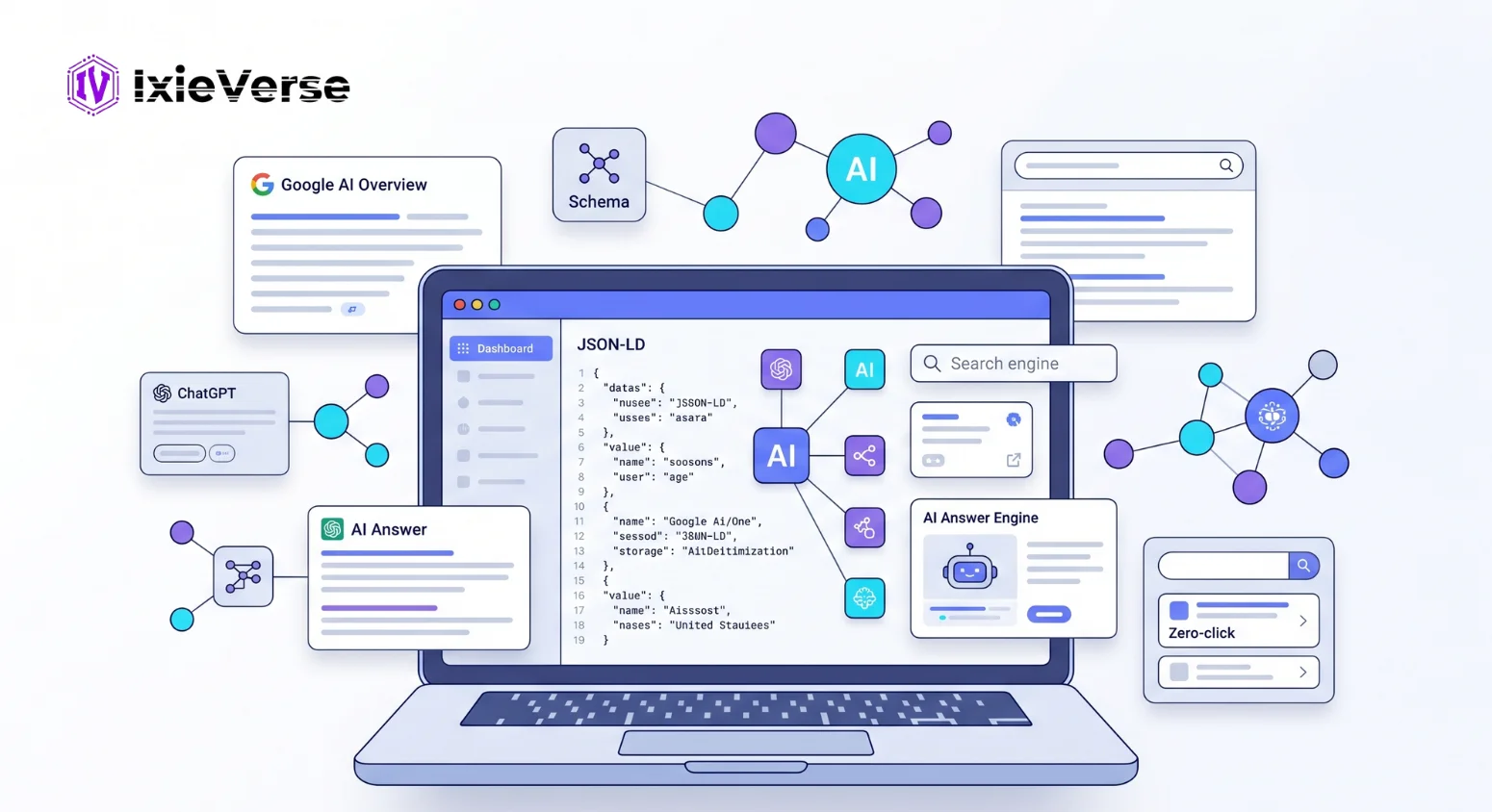
| Structured data is code that helps Google and AI systems like ChatGPT, Gemini, and Perplexity understand your content accurately. It is not a direct ranking factor, but it drives rich results, featured snippets, and AI citations by making your entities, facts, and answers machine-readable. Use JSON-LD, focus on Article, FAQ, HowTo, and Organization schema, write question-based headings, validate everything, and update it quarterly. Ranking on Google is no longer the finish line. Your content also has to be understood, extracted, and cited by AI systems — and structured data is how you make that possible. This guide covers what structured data is, whether it actually affects rankings, which schema types matter most in 2026, and exactly how to implement, validate, and maintain it, with a real code example you can copy today. |
 ChatGPT
 Grok
Grok
 Claude
 Perplexity
 Google AI
- 1 What Is Structured Data?
- Is Structured Data a Google Ranking Factor?
- 2 Why Structured Data Matters More in 2026
- 3 Major Reasons Structured Data Matters
- 1. AI Search Is Entity-Driven
- 2. Zero-Click Search Dominates
- 3. Google Prioritizes Semantic Understanding
- 4 Types of Structured Data That Improve SEO & AI Visibility
- 5 How to Implement Structured Data Properly
- Step-by-Step Framework
- 6 Free Schema Tool
- 7 Best Structured Data Strategies for LLM Visibility
- High-Impact Strategies
- 8 Structured Data and LLMs.txt: What’s Next
- 9 Structured Data vs Traditional SEO
- 10 Best Schema Types for Different Content Formats
- 11 Common Structured Data Mistakes
- Mistakes to Avoid
- 12 Conclusion
- 13 FAQ
- What is structured data in SEO?
- Does schema markup improve rankings?
- Can ChatGPT read structured data?
- Which schema format should I use?
- What schema helps AI Overviews?
- Is FAQ schema still useful in 2026?
- How often should schema be updated?
What Is Structured Data?
Structured data is a standardized code format, usually JSON-LD, added to a webpage’s HTML that describes its content in a way machines can reliably interpret — identifying entities like the author, publish date, product, or FAQ pairs. It uses the shared Schema.org vocabulary so search engines and AI systems read your page the same way.
Is Structured Data a Google Ranking Factor?
No — structured data does not directly move your rankings up or down. What it does is make your existing content eligible for rich results, featured snippets, and AI citations, which increase visibility and click-through rate. Think of it as removing the barriers between good content and the systems deciding what to show searchers, rather than a ranking boost itself.
Why Structured Data Matters More in 2026
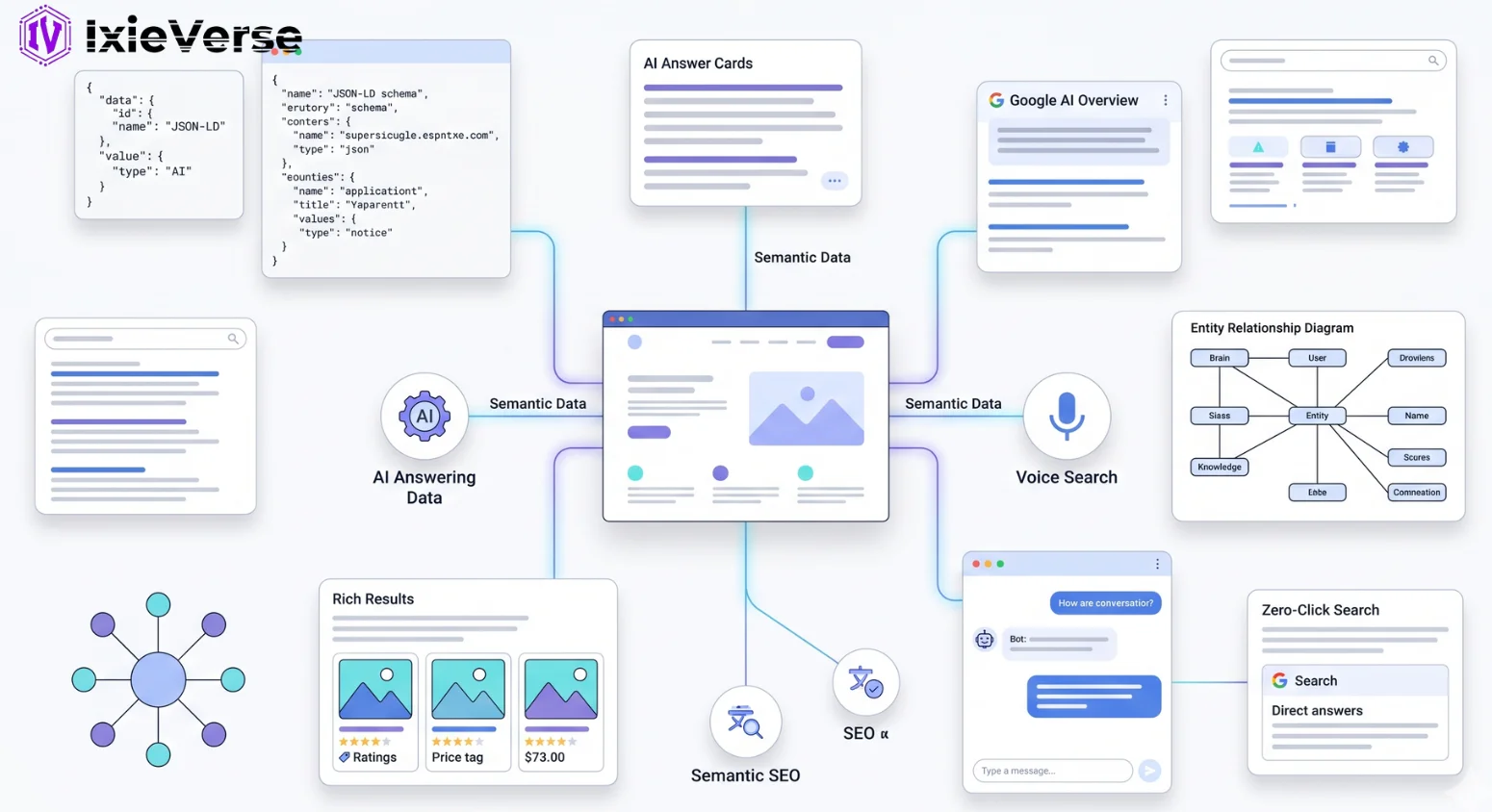
AI systems don’t just match keywords — they map entities, relationships, and facts to answer questions directly. Without structured data, AI tools have to guess at your content’s meaning, which lowers the odds they’ll cite you. With it, your author, organization, product, and FAQ content becomes explicit and easy to trust and quote.
Three forces are driving this shift:
- AI search is entity-driven. Systems evaluate entities, attributes, and trust signals — not just keywords.
- Zero-click search keeps growing. A large share of searches are now answered inside AI Overviews, featured snippets, and voice results, without a click at all.
- Google increasingly rewards semantic clarity — structured entities, clear hierarchy, and machine-readable organization.
Major Reasons Structured Data Matters
1. AI Search Is Entity-Driven
Modern AI systems do not simply index keywords.
They analyze:
- entities
- relationships
- attributes
- topical context
- trust signals
Structured data helps define those relationships clearly.
2. Zero-Click Search Dominates
A growing percentage of searches never result in clicks because answers appear directly inside:
- AI summaries
- featured snippets
- People Also Ask
- voice assistants
- AI Overview panels
Schema helps your content become the source of those answers.
3. Google Prioritizes Semantic Understanding
Google increasingly rewards:
- structured entities
- topical clarity
- content hierarchy
- machine-readable organization
Structured data supports all four.
Types of Structured Data That Improve SEO & AI Visibility
| Schema Type | Best Use Case | AI Visibility Impact |
| Article | Blog posts | Improves indexing & AI summarization |
| FAQ | Question-answer sections | Helps AI extraction & snippets |
| HowTo | Tutorials | Enhances procedural AI answers |
| Product | Ecommerce | Improves shopping AI visibility |
| Organization | Brand identity | Strengthens entity recognition |
| Breadcrumb | Site structure | Helps contextual understanding |
| Review | Ratings & testimonials | Supports trust signals |
| Person | Author entities | Improves E-E-A-T signals |
How to Implement Structured Data Properly
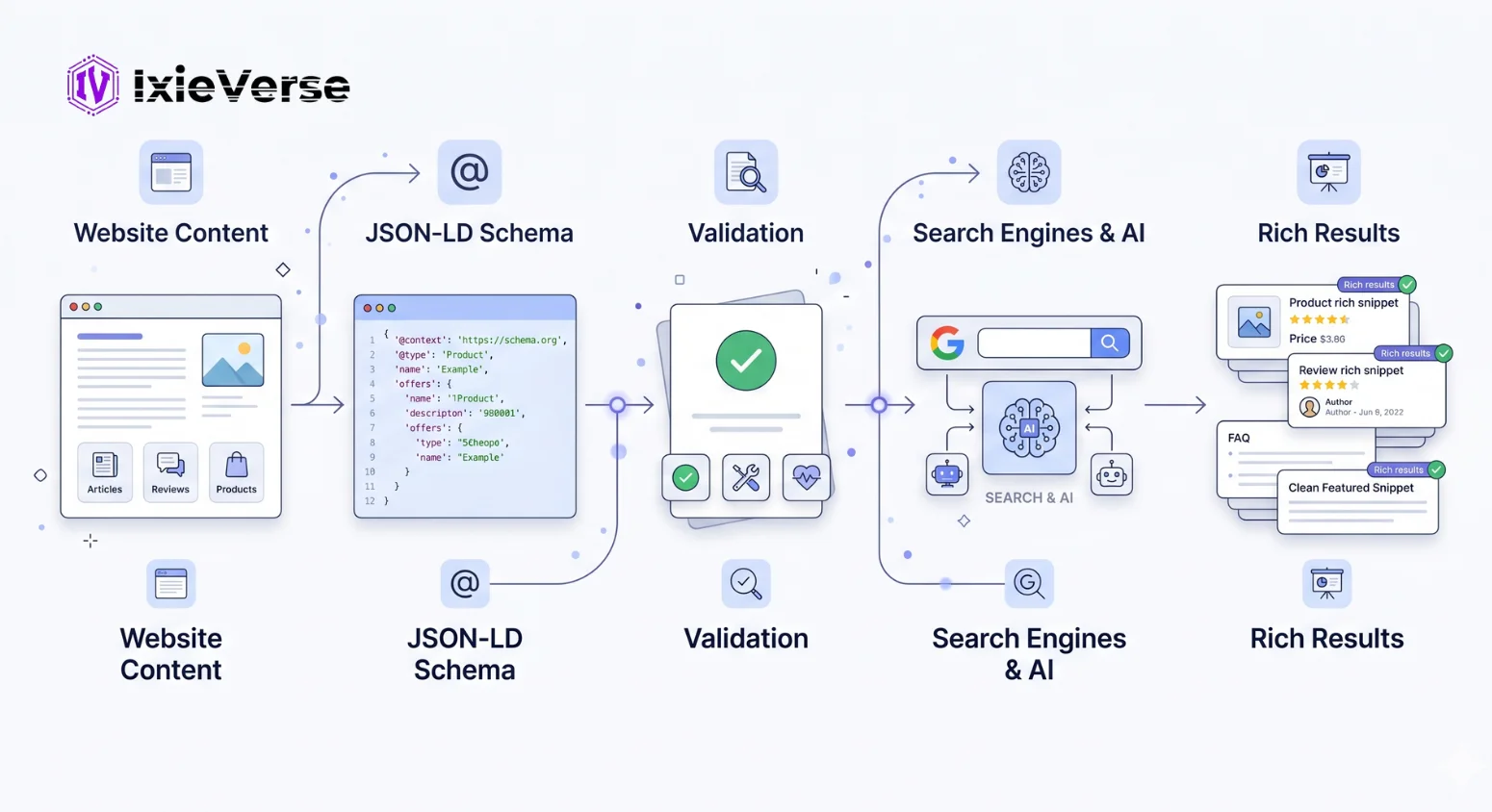
Learning how to implement structured data for SEO properly can significantly improve your eligibility for rich results, AI summaries, and zero-click search visibility.
Step-by-Step Framework
Step 1: Identify Search Intent
Before adding schema:
- Understand the page goal
- Determine user intent
- Match schema to content type
Examples:
- Tutorial → HowTo schema
- Q&A page → FAQ schema
- Product page → Product schema
Step 2: Use JSON-LD Format
JSON-LD emains Google’s preferred structured data format in 2026.
Benefits:
- Easier implementation
- Cleaner maintenance
- Better compatibility with AI crawlers
- Reduced HTML conflicts
Step 3: Add Entity Context
Entity SEO is critical.
Include:
- organization name
- author identity
- product entities
- location data
- related technologies
- industry classifications
This improves knowledge graph alignment.
Step 4: Validate Schema
Always validate using:
- Schema validators
- Rich result testing tools
- AI parsing simulations
Broken schema reduces trust signals.
Step 5: Align Content Structure With AI Parsing
Use:
- short paragraphs
- clear headings
- direct answers
- semantic organization
- bullet lists
- question formatting
Structured data works best with structured content.
Explore: AI Search Statistics 2026: 60+ Verified Numbers Every Marketer Should Know
Free Schema Tool
| Want to generate schema markup instantly without coding? Try the IxieVerse Free Schema Generator Tool to create: 1. FAQ schema 2. Article schema 3. HowTo schema 4. Product schema 5. JSON-LD output optimized for Google & AI search engines Perfect for publishers, agencies, ecommerce brands, and SEO teams. |
Best Structured Data Strategies for LLM Visibility
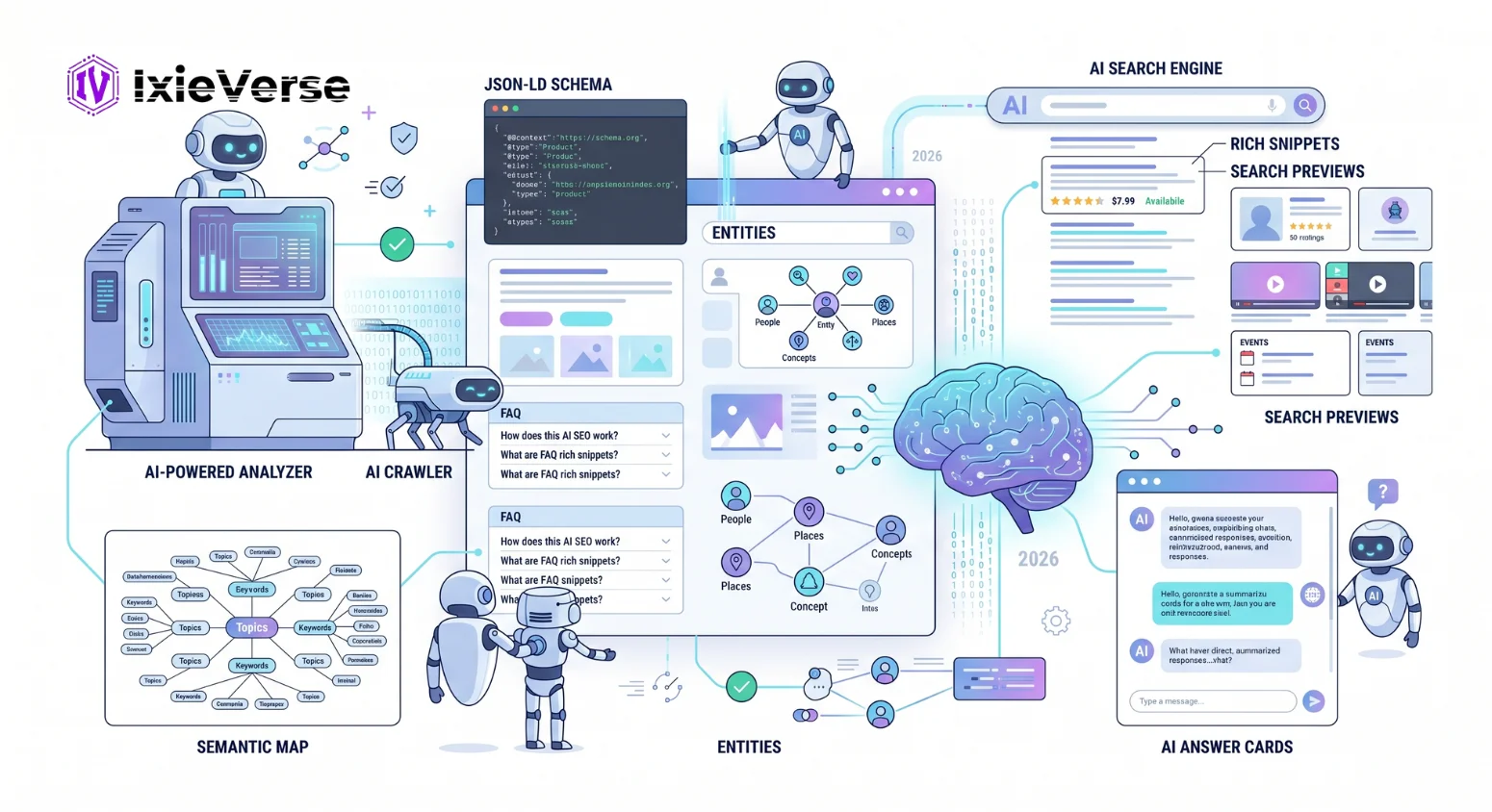
The best structured data for SEO strategies focus on semantic clarity, machine readability, and conversational content formatting that AI systems can easily interpret.
To improve LLM visibility, combine schema markup with semantic content architecture. AI systems prioritize pages that clearly define entities, answer questions directly, use hierarchical formatting, and include machine-readable structured data aligned with user intent.
High-Impact Strategies
Use FAQ Sections
LLMs frequently extract FAQ blocks because they:
- mirror conversational queries
- simplify retrieval
- improve answer confidence
Add Definitions Early
Definitions help AI systems establish topic understanding quickly.
Best practice:
- 40–60 words
- concise
- entity-rich
- keyword-focused
Create Snippet-Friendly Sections
Use:
- numbered lists
- bullet frameworks
- concise summaries
- comparison tables
These increase extraction likelihood.
Build Entity Relationships
Mention related:
- tools
- technologies
- platforms
- frameworks
- authors
- organizations
This strengthens semantic relevance.
Structured Data and LLMs.txt: What’s Next
A new companion standard, LLMs.txt, is emerging alongside schema markup. It lets websites explicitly define which content AI crawlers can access and how it may be used — giving publishers more control over AI citation while schema handles the meaning. Pairing both is becoming best practice for brands serious about long-term AI visibility.
Structured Data vs Traditional SEO
| Traditional SEO | AI-Era SEO |
| Keyword-focused | Entity-focused |
| Blue-link rankings | Answer visibility |
| Metadata optimization | Semantic understanding |
| Page authority | Knowledge authority |
| Click-based | Zero-click optimized |
| Human readability | Human + machine readability |
Best Schema Types for Different Content Formats
| Content Type | Recommended Schema |
| Blog article | Article |
| Tutorial | HowTo |
| Ecommerce page | Product |
| SaaS page | SoftwareApplication |
| Local business | LocalBusiness |
| FAQ page | FAQPage |
| Video content | VideoObject |
| Review article | Review |
Common Structured Data Mistakes
The most common structured data mistakes include using irrelevant schema types, mismatching visible content with markup, failing validation tests, overusing FAQ schema, and ignoring entity consistency across pages. These issues reduce trust signals and may limit rich result eligibility.
Mistakes to Avoid
- Using fake reviews
- Adding hidden schema content
- Incorrect nesting
- Duplicate markup
- Outdated schema properties
- Missing entity references
- Poor content hierarchy
- Ignoring schema maintenance
Conclusion
Structured data is no longer optional.
In 2026, it sits at the center of:
- SEO
- AI visibility
- semantic search
- zero-click optimization
- conversational discovery
The future of search belongs to content that machines can understand instantly.
Brands that combine:
- structured data
- entity SEO
- AI-friendly formatting
- semantic architecture
will dominate both traditional rankings and AI-generated answers.
The search ecosystem is shifting from keyword matching to contextual understanding.
Structured data is the bridge between your content and machine intelligence.
FAQ
What is structured data in SEO?
Structured data is machine-readable code that helps search engines understand webpage content and context, improving visibility in rich results and AI-generated answers.
Does schema markup improve rankings?
Schema markup does not directly increase rankings, but it improves visibility, click-through rates, semantic understanding, and eligibility for enhanced SERP features.
Can ChatGPT read structured data?
AI systems can interpret structured content signals and semantic markup to better understand webpage meaning, entities, and relationships.
Which schema format should I use?
JSON-LD is the recommended format because it is scalable, easy to manage, and supported by Google and most AI indexing systems.
What schema helps AI Overviews?
FAQ, Article, Organization, Product, and HowTo schemas are among the most effective for AI Overview visibility.
Is FAQ schema still useful in 2026?
Yes, but only when used naturally and aligned with real user questions. Spammy FAQ implementations are increasingly ignored.
How often should schema be updated?
Schema should be reviewed quarterly and updated whenever content structure, products, services, or entity relationships change.




![50 Best Website Design Examples for Inspiration [2026]](https://ixieverse.com/wp-content/uploads/2026/08/Best-Website-Design-Examples-150x150.webp)
Add a Comment