Most people hear “SEO” and think it’s some confusing, technical thing meant only for experts. But here’s the reality: if your website doesn’t show up on Google, it barely exists. You can have great content, a clean design, and a solid product—and still get zero traffic. That’s where SEO (search engine optimization) comes in. It’s simply how you help search engines understand your site and show it to the right people. In this guide, we’ll break down what SEO is, how SEO works, and why SEO is important—without jargon, without fluff, and with examples that actually make sense.
Quick answer:
SEO helps your website show up in organic search results so the right people can find you without paying for ads. It works by improving how search engines crawl, understand, and rank your content—and it pays off with steady, long-term traffic.
 ChatGPT
 Grok
Grok
 Claude
 Perplexity
 Google AI
- 1 What Is SEO?
- 2 How does SEO work?
- Crawling: How search engines find your pages
- Indexing: How search engines understand your content
- Ranking: How search engines decide who ranks first
- 3 Why is SEO important?
- 4 Types of SEO
- Technical SEO
- On-page SEO
- Off-page SEO
- 5 How to do SEO: Best practices for beginners
- 1. Find relevant topics with keyword research
- 2. Create helpful content
- 3. Optimize on-page SEO
- 4. Build links from relevant websites
- 6 How to learn SEO
- 7 Conclusion
- 8 Frequently Asked Questions
- What is SEO in simple words?
- How long does SEO take to work?
- Is SEO better than paid ads?
- Do beginners really need SEO tools?
- What are the most important SEO ranking factors?
- Is SEO still worth it in 2026?
What Is SEO?
SEO (search engine optimization) is how you make your website easier for search engines to understand and easier for people to find. When someone searches on Google, SEO helps your pages appear in the organic search results instead of getting buried. It’s also a core part of digital marketing, because it focuses on bringing in traffic from search engines without paying for ads, helping businesses reach the right audience at the right time.
In simple terms, what SEO does is improve how your site is discovered, read, and ranked by search engines. It focuses on matching your content with real search queries, not forcing keywords where they don’t belong.
At a basic level, SEO helps by:
- Making your pages clear and relevant for search engines
- Improving visibility for important SEO keywords
- Driving steady organic search traffic without paying for ads
How does SEO work?
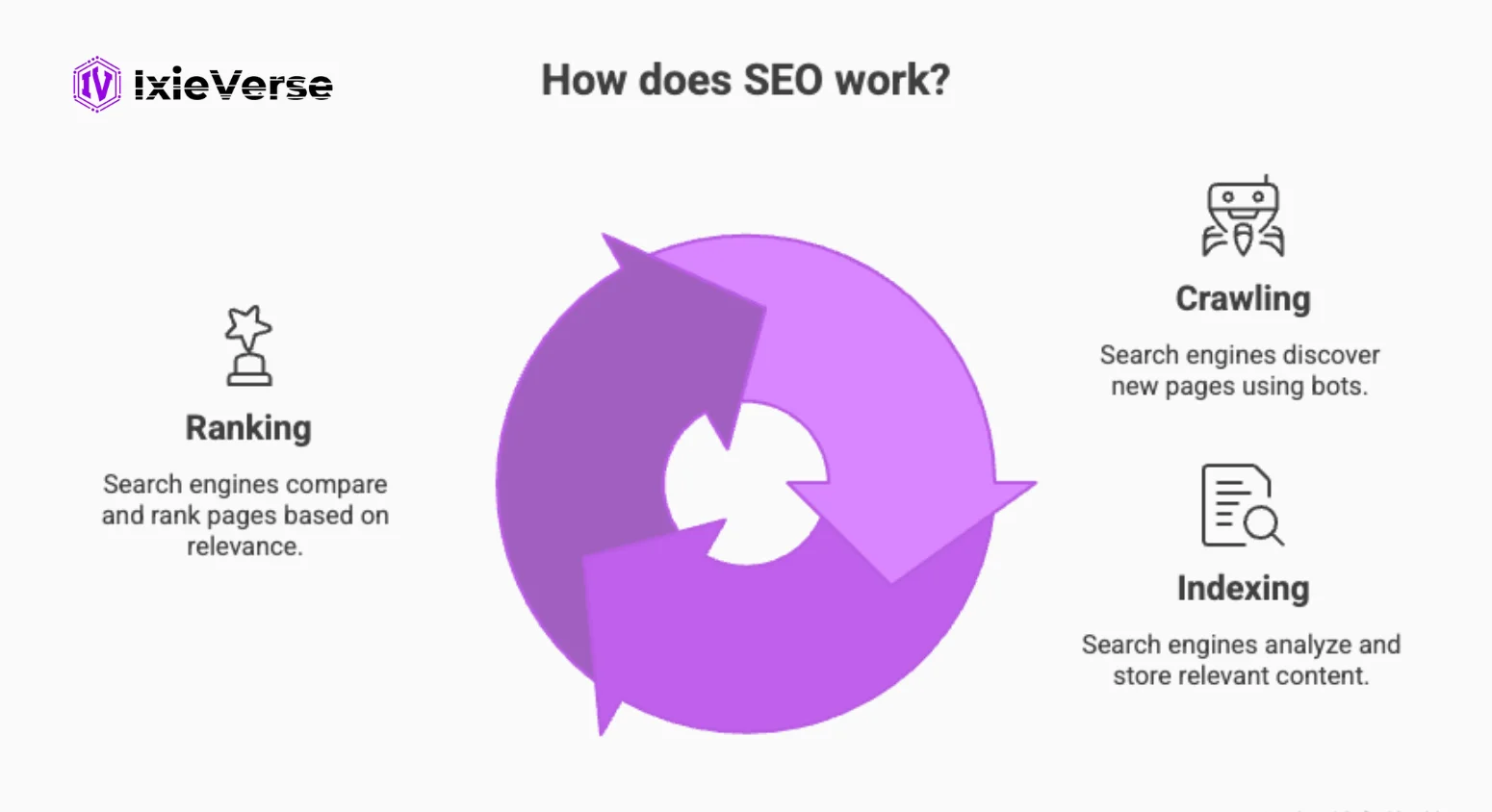
Many websites don’t rank because search engines never fully understand their pages. SEO works by helping search engines find your content, understand it, and decide where it belongs in search results.
Search engines follow a three-step process to do this: crawling, indexing, and ranking.
Crawling: How search engines find your pages
Search engines use bots to scan the web and discover new or updated pages. If a page can’t be crawled, it won’t appear in search results.
Crawling depends on internal links, fast page speed, clean URLs, and proper technical SEO so search engines can access your site easily.
Indexing: How search engines understand your content
After crawling, search engines analyze your page and decide whether to store it in their index. If the content is unclear or duplicated, it may be skipped.
Strong indexing comes from clear headings, relevant keywords, helpful content, and structured data that explain what the page is about.
Ranking: How search engines decide who ranks first
Once indexed, your page is compared with others targeting the same keyword. Search engines rank pages that best match search intent and provide the most value.
Ranking is influenced by:
- Content relevance and quality
- Backlinks and site authority
- User experience like load speed and engagement
Why is SEO important?
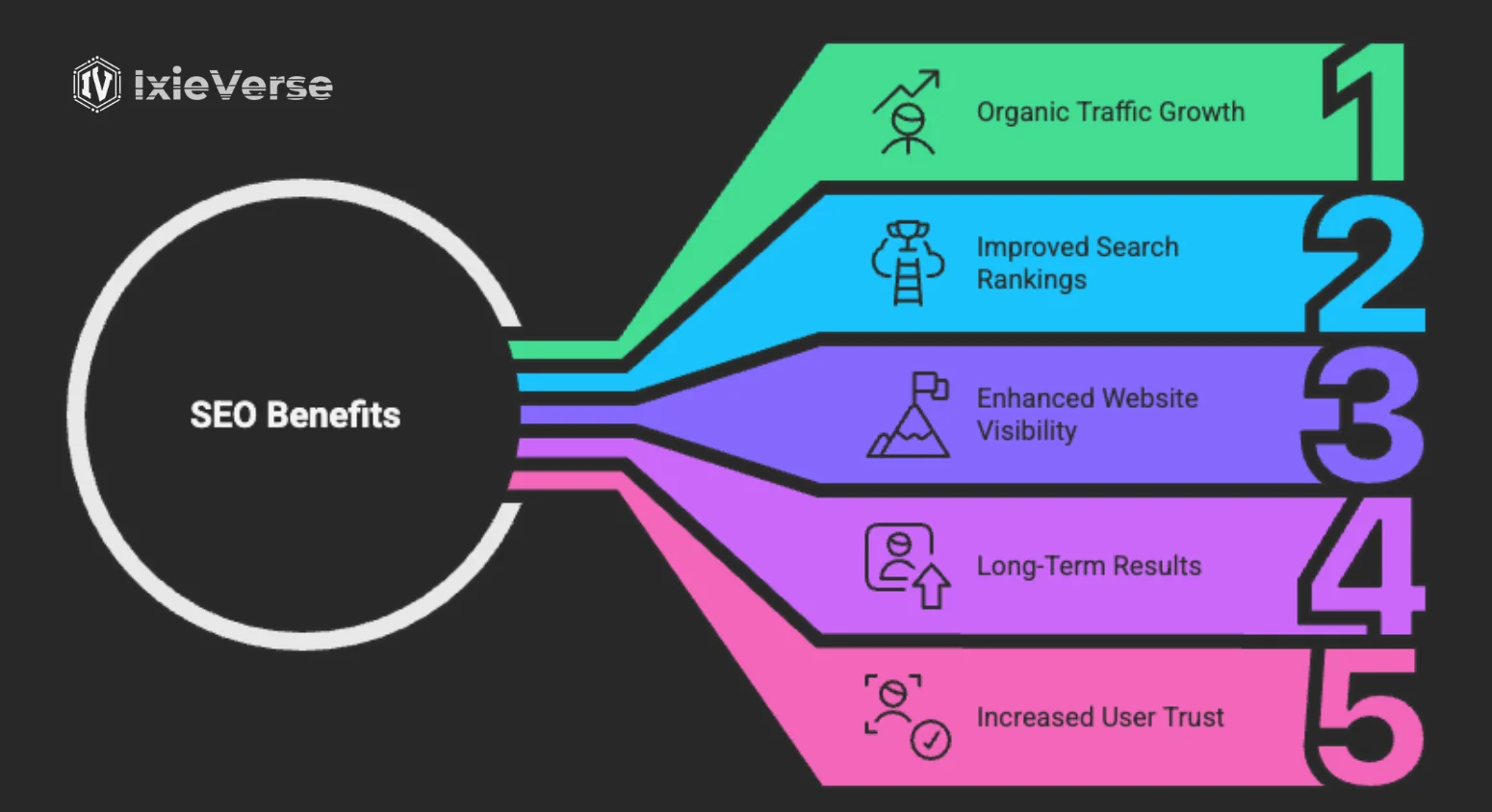
People often wonder if SEO really matters or if it’s just another marketing buzzword. The truth is, if your site isn’t optimized for search engines, you’re leaving a huge portion of potential visitors on the table.
SEO is important because it’s one of the biggest drivers of organic search traffic—the people actively searching for what you offer. According to multiple industry studies, over half of all website traffic comes from organic search, making SEO the backbone of online visibility.
Here’s why it matters in real terms:
- Most traffic doesn’t come from ads. Around 53% of website visits come from organic search, compared with much smaller shares from paid ads or social channels.
- Users click organic results first. Sites ranking on the first page capture the majority of clicks—studies show the first result can get up to ~31% click-through rate.
- SEO attracts qualified visitors. People who find you through search are usually looking for something specific, which means better engagement and higher potential for leads or sales.
- Cost-effectiveness beats traditional channels. Leads from SEO tend to convert better and cost less over time compared with outbound methods like direct mail or cold outreach.
At the end of the day, SEO isn’t optional if you want real web visibility. It shapes how your site appears in search results and directly influences the volume and quality of traffic you get.
Types of SEO
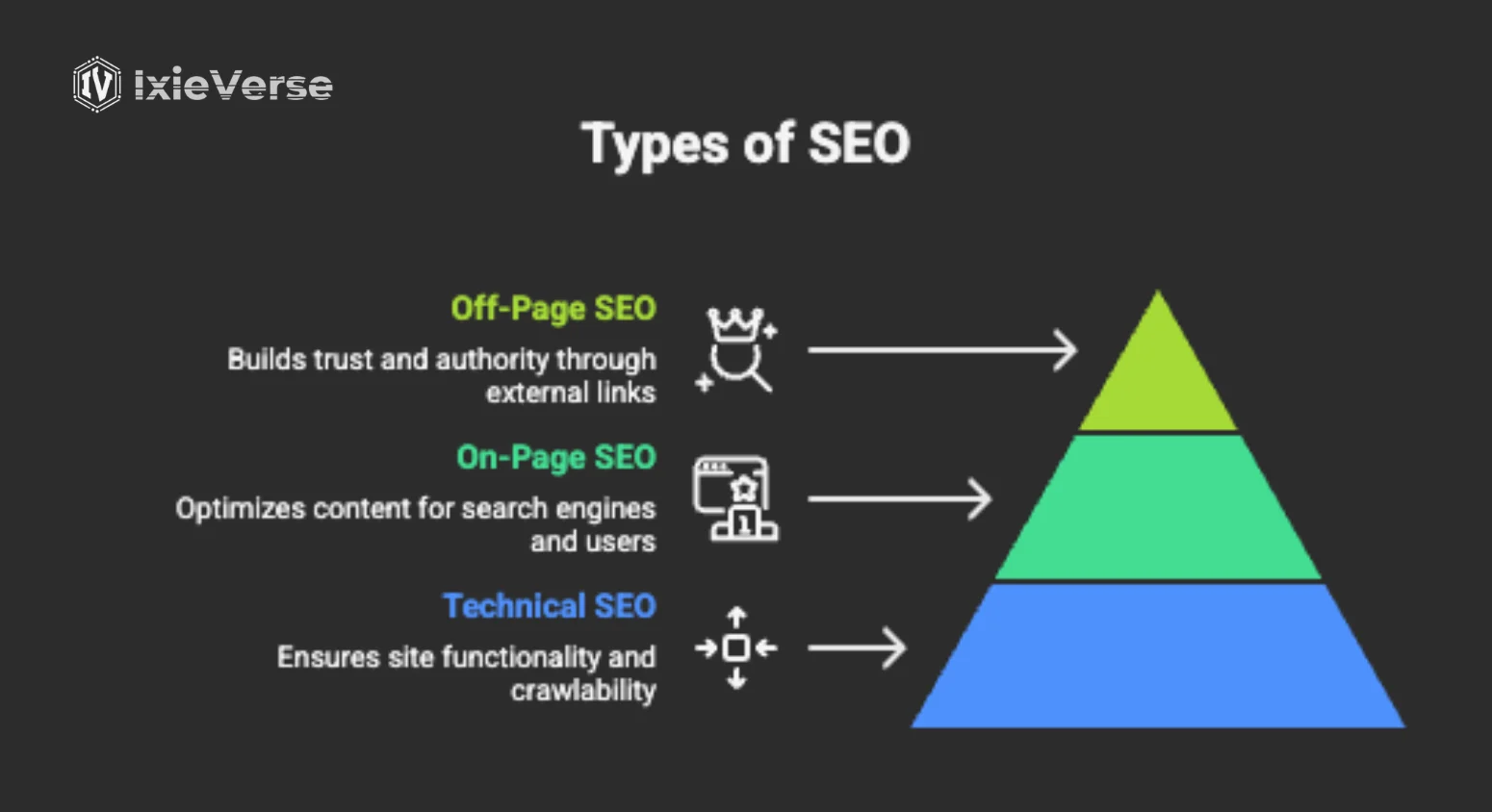
A lot of people think SEO is just about keywords. That’s only part of the picture. SEO works properly only when three main areas are handled together, not separately.
These are the three types of SEO that affect how your site shows up in organic search results.
Technical SEO
If search engines can’t reach your site or read it properly, nothing else matters. Technical SEO takes care of how your website functions behind the scenes.
It makes sure your pages load fast, work well on mobile, and can be crawled and indexed without issues.
Technical SEO usually includes:
- Page speed and overall site performance
- Mobile-friendly design
- Fixing crawl and indexing problems
- Secure HTTPS setup and clean page URLs
On-page SEO
On-page SEO is about what’s actually on your pages. If your content is unclear or poorly structured, search engines won’t know when to show it.
This type of SEO helps match your content with what people are searching for. It also improves how users read and interact with your pages.
On-page SEO focuses on:
- Using keywords naturally in titles and headings
- Writing clear, helpful content
- Optimizing meta titles and descriptions
- Linking between related pages on your site
Off-page SEO
Search engines also care about how other websites see you. Off-page SEO is about building trust outside your own site.
When reputable sites link to you or mention your brand, it tells search engines your content is worth ranking.
Off-page SEO includes:
- Earning quality backlinks
- Getting brand mentions online
- Sharing content that people want to reference
- Building authority in your niche
How to do SEO: Best practices for beginners
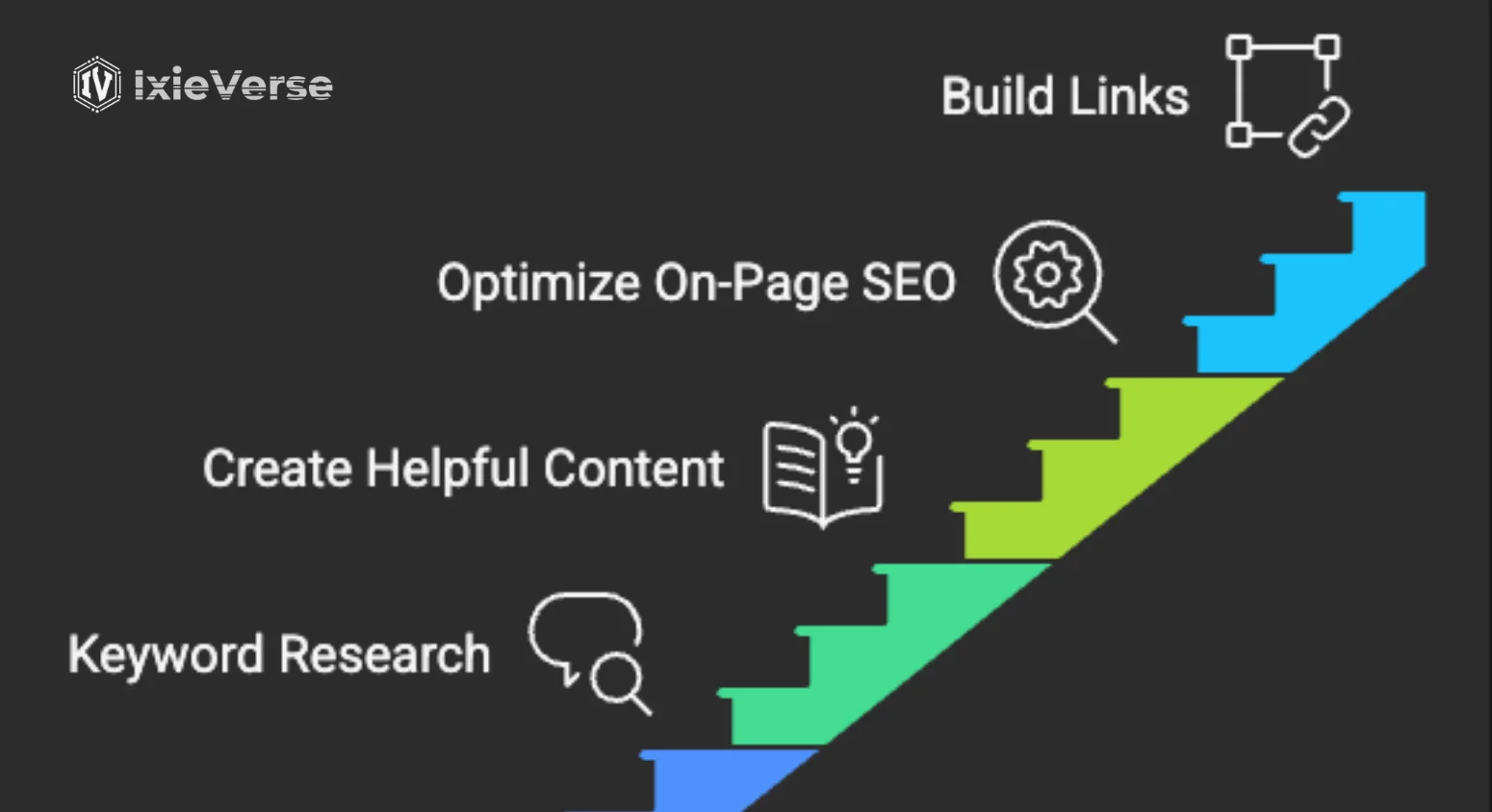
Most beginners struggle with SEO because they don’t know where to start. SEO works best when you follow a few core practices and apply them consistently instead of trying everything at once.
These steps focus on building strong SEO foundations that actually improve organic search traffic.
1. Find relevant topics with keyword research
Creating content without keyword research usually leads to zero traffic. If no one is searching for a topic, even great content won’t rank.
Keyword research helps you find search terms people actually use, their intent, and how competitive they are. Focus on keywords with clear intent and realistic competition.
2. Create helpful content
Search engines reward content that genuinely helps users. Thin or copied content rarely ranks, no matter how well it’s optimized.
Helpful content clearly answers search questions, stays on topic, and uses keywords naturally without forcing them into every sentence.
3. Optimize on-page SEO
Good content still needs structure. On-page SEO helps search engines understand what your page is about and when to show it.
On-page optimization includes:
- Writing clear meta titles and descriptions
- Using keywords in headings and URLs
- Improving internal linking between related pages
4. Build links from relevant websites
Search engines use links to measure trust. A site with no backlinks struggles to rank, even with good content.
Focus on earning quality backlinks from relevant websites through useful content, mentions, and partnerships—not spammy link tactics.
How to learn SEO
Learning SEO feels overwhelming at first because there’s too much advice and not all of it is reliable. Many beginners get stuck reading theory without knowing what to practice.
The best way to learn SEO is by combining basic knowledge with hands-on work. You don’t need advanced tools or years of experience to start seeing results.
Here’s how to approach learning SEO the right way:
- Start with SEO basics like how search engines work, keyword research, and on-page SEO
- Practice on a real website or blog, even a small one
- Use free tools like Google Search Console and Google Analytics to understand performance
- Follow trusted SEO blogs and watch how rankings change over time
- Test, fail, adjust, and repeat—SEO improves through experience, not shortcuts
Conclusion
SEO isn’t about tricks or chasing Google updates. It’s about making sure your website shows up when people are actively searching for what you offer. When SEO is done right, you get steady organic traffic, fewer ad costs, and visitors who actually want your content.
The good part is you don’t need to do everything at once. Start with the basics, improve page by page, and let data guide your next move. SEO rewards consistency, not perfection, and every small improvement adds up over time.
If people can’t find you in search results, they can’t choose you—SEO is how you fix that.
Frequently Asked Questions
What is SEO in simple words?
SEO (search engine optimization) is how you help search engines understand your website so it appears in organic search results when people search for related topics.
How long does SEO take to work?
SEO usually takes 3 to 6 months to show noticeable results. The timeline depends on competition, content quality, and how well your site is optimized.
Is SEO better than paid ads?
SEO and ads serve different purposes. SEO brings long-term organic traffic, while paid ads stop the moment you stop paying.
Do beginners really need SEO tools?
You can start SEO with free tools like Google Search Console and Google Analytics. Paid SEO tools help later, but they’re not required at the beginning.
What are the most important SEO ranking factors?
The main factors include content relevance, backlinks, page speed, mobile usability, and user experience. No single factor works alone.
Is SEO still worth it in 2026?
Yes. People still rely on search engines daily, and organic search traffic remains one of the highest-converting channels for websites.



Add a Comment