 ChatGPT
 Grok
Grok
 Claude
 Perplexity
 Google AI
- 1 TL;DR
- 2 Introduction
- 3 1. AI-Powered Budgeting Has Replaced Manual Tracking
- 4 2. Investing Is Shifting from Robo-Advisors to Full-Context AI
- 5 3. Fraud Detection Runs in Real Time, Not After the Fact
- 6 4. Conversational AI Is Becoming the First Stop for Money Questions
- 7 5. AI Is Personalizing Credit and Lending Decisions
- 8 AI Financial Tools: Category Comparison
- 9 How to Choose an AI Finance Tool: A Simple Framework
- 10 Key Stats for 2026
- 11 Risks to Know Before You Rely on AI for Money Decisions
- 12 Conclusion
- 13 Frequently Asked Questions
- What is AI-powered personal finance?
- How do AI budgeting apps work?
- Are AI financial advisors trustworthy?
- What’s the difference between a robo-advisor and an AI financial assistant?
- How is AI used in fraud detection?
- Will AI replace financial advisors?
- What are the risks of using AI for personal finance?
TL;DR
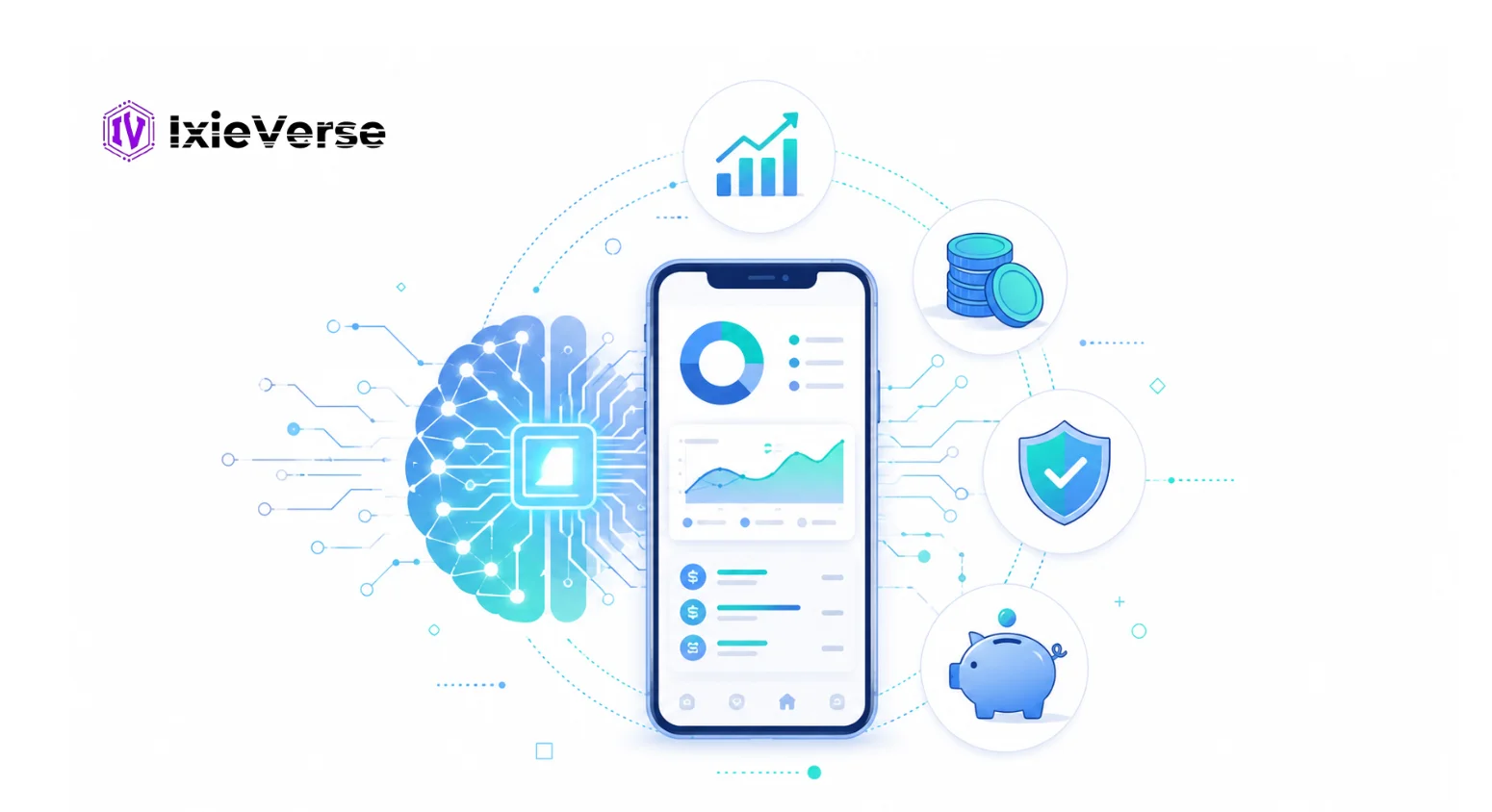
AI now touches nearly every part of personal money management in 2026: budgeting, investing, credit, fraud protection, and financial coaching. Roughly 37% of Americans already use AI for financial tasks, and AI now powers an estimated 68% of finance apps. The winners aren’t the flashiest chatbots — they’re tools with real-time access to your actual financial data, not just generic advice.
Introduction
Ask a bank teller in 2020 what AI could do for your money, and they’d mention fraud alerts. Ask that same question in 2026, and the answer looks completely different.
AI now drafts your budget, flags a suspicious charge before you notice it, rebalances your portfolio overnight, and explains why your credit score dropped — in plain English, on demand.
This guide breaks down exactly how AI is reshaping personal finance in 2026: what’s real, what’s hype, and how to use it without losing control of your own money.
1. AI-Powered Budgeting Has Replaced Manual Tracking
AI budgeting apps automatically categorize transactions, learn from your corrections, and flag unusual spending — no spreadsheets required.
- Auto-categorization that improves the more you use it
- Anomaly detection for unusual or duplicate charges
- Predictive cash-flow forecasts (“you’ll be short by Friday”)
- Natural-language queries like “how much did I spend on dining out?”
Tools like Copilot Money, Monarch Money, and Rocket Money now build this in by default rather than as a premium add-on.
2. Investing Is Shifting from Robo-Advisors to Full-Context AI
Traditional robo-advisors rebalance portfolios based on rules; newer AI advisors reason across your entire financial picture — income, debt, goals, and taxes — before recommending a move.
Platforms such as Betterment and Wealthfront pioneered rules-based automation. The newer generation of AI financial platforms goes further, factoring in spending patterns and life events, not just risk tolerance forms filled out once at signup.
Not sure what your monthly payment would look like? Use our free EMI Calculator to get an instant estimate before you apply.
3. Fraud Detection Runs in Real Time, Not After the Fact
In 2026, AI models cross-check transaction velocity, device fingerprints, geolocation, and spending history simultaneously, catching fraud in milliseconds with far fewer false declines than rule-based systems.
- Biometric verification is cutting fraud rates significantly in apps that have adopted it
- Multi-factor authentication remains essential — AI reduces risk, it doesn’t eliminate it
- Consumers should still monitor alerts; AI flags anomalies, it doesn’t guarantee catching every one
4. Conversational AI Is Becoming the First Stop for Money Questions
Instead of searching “what is an ETF,” more people now ask an AI assistant directly and get a tailored, conversational answer in seconds.
This is reshaping search itself — financial questions increasingly get answered inside ChatGPT, Gemini, or Perplexity before a person ever lands on a traditional results page, which is exactly why structuring financial content for AI extraction (as this guide does) now matters as much as ranking on Google.
5. AI Is Personalizing Credit and Lending Decisions
AI models now assess creditworthiness using a wider data set than traditional credit bureaus alone, which can help thin-file borrowers but also raises new bias and transparency concerns.
- Faster underwriting decisions
- Alternative data (cash flow, rent history) supplementing credit scores
- Regulatory scrutiny increasing around algorithmic bias in lending
Know your exact EMI before you borrow. Calculate your monthly installment in seconds — free, accurate, and no signup required.
AI Financial Tools: Category Comparison
| Category | What It Does | Example Tools | Best For |
| AI Budgeting Apps | Auto-tracks spending, flags anomalies | Copilot, Monarch, Rocket Money | Day-to-day cash flow |
| Robo-Advisors | Rules-based portfolio automation | Betterment, Wealthfront | Hands-off long-term investing |
| Full-Context AI Advisors | Reasons across full financial picture | Origin, Empower AI features | Holistic planning |
| Generic AI Chatbots | Explains concepts, no live data access | ChatGPT, Gemini, Claude | Learning & quick answers |
| Human Advisors | Personalized, regulated guidance | CFPs, RIAs | Complex, high-stakes decisions |
How to Choose an AI Finance Tool: A Simple Framework
- Define the job: budgeting, investing, credit-building, or all three?
- Check data access: does it connect securely to your real accounts, or does it just answer generic questions?
- Verify security: look for encryption, zero-retention policies, and clear compliance disclosures.
- Test personalization: ask it a specific question about your own numbers — a generic answer is a red flag.
- Keep a human check-in: use AI for daily decisions, a professional for major ones (mortgages, retirement drawdowns, tax strategy).
Explore: Best AI Tools for Finance in 2026 | Complete Guide
Key Stats for 2026
An estimated 37% of Americans now use AI for financial tasks, AI powers roughly 68% of finance apps for budgeting and investment guidance, and the global personal-finance-app market is projected to reach approximately $200+ billion in 2026, up from under $170 billion in 2025.
Risks to Know Before You Rely on AI for Money Decisions
- Bias in training data can skew credit or lending recommendations
- Overreliance on automation can erode basic financial literacy
- Not all “AI-powered” apps have real account access — some just repackage generic advice
- Data privacy: always check encryption and data-retention policies before connecting bank accounts
Conclusion
AI has moved from a background feature to the operating layer of personal finance. The apps winning in 2026 aren’t the ones with the most AI buzzwords — they’re the ones that actually understand your financial life and use that context responsibly.
The smartest approach isn’t choosing AI or a human advisor. It’s using AI for the daily grind — tracking, alerts, quick answers — and reserving human judgment for the decisions that shape your future.
Discover: Fixed vs Floating Interest Rate Home Loan | 2026 Guide
Frequently Asked Questions
What is AI-powered personal finance?
It’s software that uses AI to automate budgeting, investing, credit monitoring, and financial advice using a person’s real account data instead of generic rules.
How do AI budgeting apps work?
They connect to your bank accounts via secure APIs, categorize transactions automatically, learn from your corrections, and flag unusual activity in real time.
Are AI financial advisors trustworthy?
Reputable ones are regulated and transparent about data use, but accuracy varies — always confirm a tool discloses its compliance and data-security practices.
What’s the difference between a robo-advisor and an AI financial assistant?
A robo-advisor follows fixed rules to rebalance investments. An AI financial assistant reasons across your whole financial picture — spending, debt, and goals — before recommending anything.
How is AI used in fraud detection?
AI models analyze transaction velocity, location, and device data simultaneously, catching suspicious activity in milliseconds with fewer false alarms than older rule-based systems.
Will AI replace financial advisors?
Not entirely. AI is taking over routine tasks and first-line questions, but complex, high-stakes decisions still benefit from a licensed human advisor.
What are the risks of using AI for personal finance?
Data privacy exposure, algorithmic bias in lending, and overreliance on automation are the top three risks consumers should watch for.




![50 Best Website Design Examples for Inspiration [2026]](https://ixieverse.com/wp-content/uploads/2026/08/Best-Website-Design-Examples-150x150.webp)
Add a Comment