| TL;DR — Quick Answer |
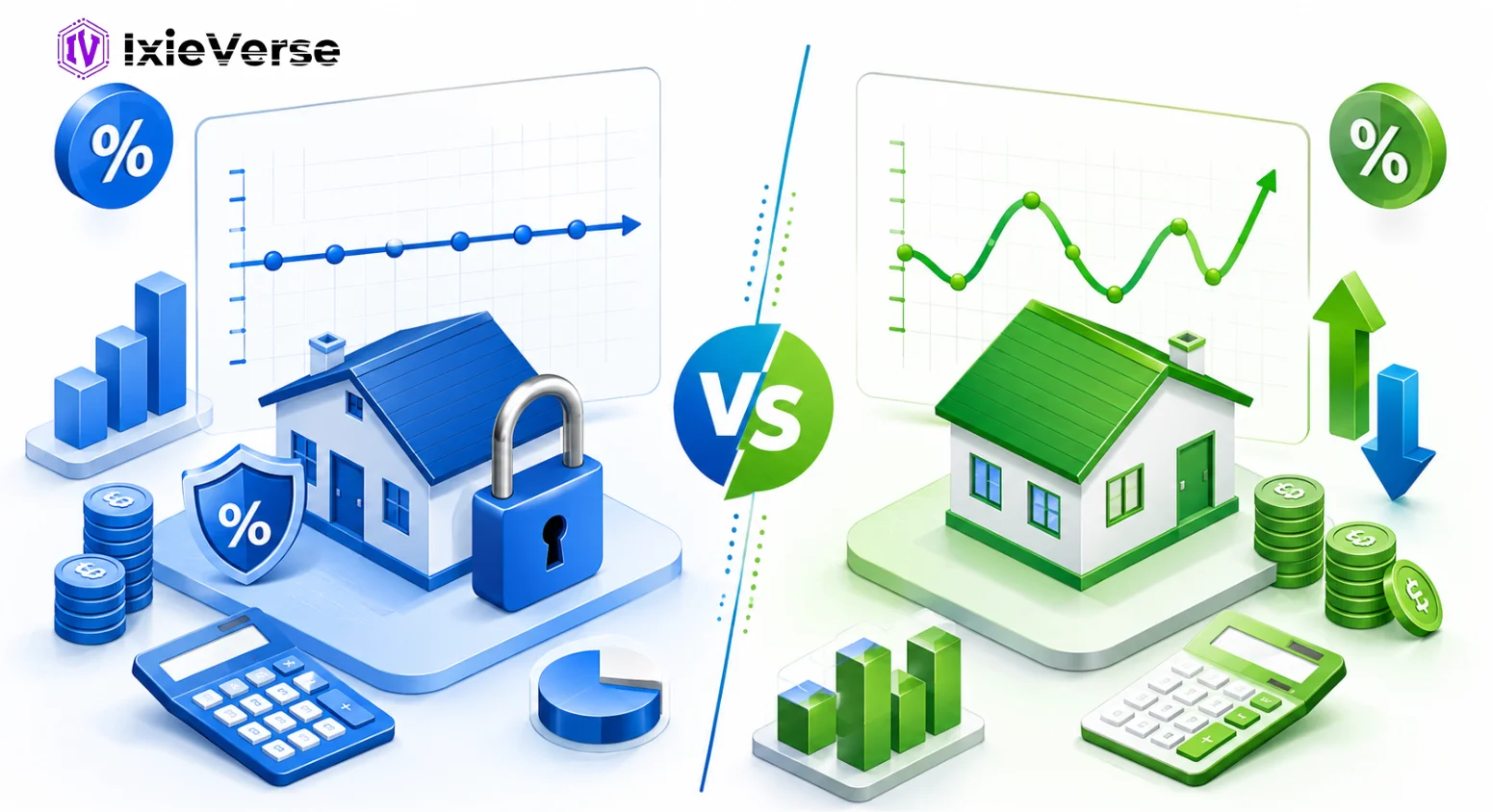
| Fixed rate: Locks your interest rate for the loan term. Great for budget certainty and rising-rate environments. |
| Floating rate: Adjusts with market benchmarks. Best when rates are expected to fall — and usually starts lower. |
| Combination loan: Part fixed, part floating. Ideal if you want short-term stability with long-term flexibility. |
| You can switch between rate types at any time for a nominal fee. |
| Neither is universally better — your financial goals, income stability, and rate outlook decide. |
You’ve found the house. You’ve crunched the numbers. Now you’re staring at a loan application with one last question that could cost — or save — you tens of thousands of dollars:
Fixed or floating interest rate?
It’s the most consequential rate decision in your home loan journey, yet most borrowers choose based on gut feel. In 2026, with central banks navigating cautious easing cycles after years of elevated rates, this decision deserves a sharper lens.
This guide breaks down exactly what each option means, when each is the right choice, and how to decide without second-guessing yourself.
 ChatGPT
 Grok
Grok
 Claude
 Perplexity
 Google AI
- 1 What Is a Fixed vs Floating Interest Rate Home Loan?
- What Is a Fixed Rate Home Loan?
- What Is a Floating Rate Home Loan?
- 2 Fixed vs. Floating Rate: Head-to-Head Comparison
- 3 When Should You Choose a Fixed Rate Home Loan?
- 4 When Should You Choose a Floating Rate Home Loan?
- 5 How to Choose: A 5-Step Decision Framework
- 6 The Combination Loan: The Best of Both Worlds?
- 7 2026 Rate Environment: What Borrowers Should Know
- 8 Conclusion: Make the Rate Decision That Fits Your Life
- 9 Frequently Asked Questions
- What is the main difference between a fixed and floating rate home loan?
- Which type of home loan rate is better in 2026?
- Can I switch from a fixed to a floating rate during my loan tenure?
- Is there a prepayment penalty on a floating rate home loan?
- What is a combination home loan?
- What happens to my EMI when a floating rate goes up?
- How often does a floating rate change?
- Is a fixed rate always more expensive than a floating rate?
What Is a Fixed vs Floating Interest Rate Home Loan?
A fixed interest rate home loan locks your rate at the time of borrowing — it stays constant throughout the loan tenure, making EMIs predictable. A floating (adjustable) interest rate home loan changes with the lender’s benchmark rate, meaning your EMI or loan tenure can adjust up or down as market rates move.
What Is a Fixed Rate Home Loan?
In a fixed rate home loan, the interest rate is agreed upon at the time of signing and does not change for a specified period — either the entire loan tenure or a set term (e.g., 3, 5, or 10 years).
Your monthly EMI stays identical every month, making it easy to budget. The tradeoff: fixed rates are typically priced slightly higher than floating rates at the time of borrowing.
What Is a Floating Rate Home Loan?
Also called an adjustable-rate mortgage (ARM) in the US context, a floating rate loan is pegged to a benchmark rate — such as the Secured Overnight Financing Rate (SOFR) in the US, or the lender’s own Prime Lending Rate.
When that benchmark moves up or down, your interest rate adjusts accordingly. This is done at set intervals (quarterly, semi-annually, or annually). In most cases, the loan tenure adjusts rather than the EMI itself — though borrowers can request the opposite.
Wondering what your monthly payments will actually look like?
Try the IxieVerse EMI Calculator — enter your loan amount, tenure, and rate to get an instant breakdown.
Fixed vs. Floating Rate: Head-to-Head Comparison
| Feature | Fixed Rate | Floating Rate |
|---|---|---|
| Interest Rate | Locked at origination | Changes with benchmark rate |
| EMI Predictability | Completely stable | Can vary over time |
| Starting Rate | Slightly higher | Slightly lower |
| Best When Rates Are… | Rising or at a trough | Falling or uncertain |
| Prepayment Penalty | Usually applies | Typically no penalty |
| Tenure Flexibility | Fixed tenure | Tenure adjusts with rate changes |
| Risk Level | Lower (certainty) | Higher (market-dependent) |
| Rate Switch Option | Yes, for a nominal fee | Yes, for a nominal fee |
| Budget Planning | Easier (predictable EMI) | Harder (EMI can shift) |
| Long-Term Cost | Can be higher if rates fall | Can be lower if rates fall |
When Should You Choose a Fixed Rate Home Loan?
Choose fixed if any of these apply to your situation:
- You need EMI certainty — Your monthly budget is tight or income is fixed (e.g., salaried with no bonuses).
- You believe rates will rise — If central bank signals point to rate hikes, lock in now.
- Rates have recently fallen to comfortable levels — Lock in a favorable rate before the next cycle turns.
- You’re a first-time buyer — Predictability reduces financial anxiety during the adjustment period.
- Your EMI is within 25–30% of take-home income — This is the ideal EMI-to-income ratio for a fixed commitment.
When Should You Choose a Floating Rate Home Loan?
Choose floating if any of these describe your situation:
- You expect interest rates to fall — A rate cut environment directly reduces your outstanding interest cost.
- You’re uncertain about rate direction — Floating keeps you aligned with the market rather than locked against it.
- You want a lower starting rate — Floating rates typically begin 0.25–0.75% lower than comparable fixed rates.
- You plan to prepay early — No prepayment penalty means you can reduce principal aggressively without a fee.
- Your income grows over time — If income rises, EMI adjustments are manageable.
Know Your EMI Before You Sign Anything.
IxieVerse EMI Calculator — instant, accurate, free.
How to Choose: A 5-Step Decision Framework
Use this step-by-step framework before signing your loan documents:
- Check the rate environment. Are central banks in a hiking or cutting cycle? In 2026, most major economies entered a cautious easing phase — which favors floating rates for new borrowers.
- Assess your income stability. Fixed salary with no variable component? Fixed rate wins. Variable income or expecting salary growth? Floating rate offers more room.
- Calculate the rate spread. If fixed rate is more than 1% above the floating rate, the math usually favors floating — unless you strongly expect multiple rate hikes ahead.
- Evaluate your prepayment plans. Planning to pay off in 10 years on a 20-year loan? A floating rate with no prepayment penalty saves significantly.
- Consider a combination loan. Not sure? Split the loan — fixed for the first 3–5 years to cover stable cash flow needs, then switch to floating for the remainder.
The Combination Loan: The Best of Both Worlds?
A combination (or hybrid) home loan gives you a fixed rate for an initial period — typically 2 to 10 years — then converts to a floating rate for the balance tenure.
This works well if:
- You have other EMIs running now (car loan, personal loan) and need predictability for 3–5 years.
- You expect interest rates to decline over the medium term but want short-term certainty.
- You are uncertain which direction rates will go but don’t want to be caught entirely exposed.
Most lenders allow you to switch rate types at any point in your tenure for a nominal conversion fee — so your initial choice is never permanent.
Explore: What Happens If You Miss an EMI Payment? (Consequences & Recovery Tips)
2026 Rate Environment: What Borrowers Should Know
Understanding the macro backdrop is critical to this decision in 2026:
- Most central banks (including the US Federal Reserve) began rate cuts in late 2024 and continued cautiously through 2025–2026, after a prolonged high-rate cycle.
- Mortgage rates have eased from peak levels but remain elevated compared to pre-2022 benchmarks.
- AI-powered mortgage platforms now offer real-time rate alerts and scenario modeling, making it easier to compare fixed vs. floating outcomes before committing.
- Hybrid ARMs (e.g., 5/1, 7/1) remain popular in the US — offering a fixed intro period followed by annual floating adjustments.
- Borrowers who locked in floating rates in early 2024 benefited from subsequent rate cuts — reinforcing the case for floating when a rate-cut cycle is underway.
Trend Insight: In 2026, floating rates are broadly favored by financial advisors for new borrowers — but only if the borrower’s income can absorb a potential 0.5–1% upward correction.
Before your next lender meeting, know your numbers.
The IxieVerse EMI Calculator shows your monthly payment, total interest, and full amortization schedule — instantly.
Conclusion: Make the Rate Decision That Fits Your Life
The fixed vs. floating rate debate doesn’t have a universal winner — it has a personal one.
In 2026, with the rate environment tilting toward easing, floating rates offer a cost advantage for most new borrowers willing to accept some variability. But if predictability, income stability, or a tight budget defines your situation, a fixed rate is the smarter anchor.
The good news: you’re not locked in forever. Most lenders offer flexible switching options, and combination loans let you hedge both sides.
Use the 5-step framework above, run your numbers through an EMI calculator with both rate scenarios, and choose the structure that fits your life — not just today’s rate headline.
Also Read: EMI vs Simple Interest: What’s the Difference? (Full 2026 Guide)
Frequently Asked Questions
What is the main difference between a fixed and floating rate home loan?
A fixed rate stays constant for your entire loan tenure (or a set period), keeping your EMI stable. A floating rate adjusts with market benchmarks, meaning your EMI or loan tenure can change when rates move.
Which type of home loan rate is better in 2026?
In 2026’s cautious rate-easing environment, floating rates offer better value for most borrowers — they start lower and benefit from ongoing rate reductions. Fixed rates are better if you prioritize EMI certainty or expect rates to reverse upward.
Can I switch from a fixed to a floating rate during my loan tenure?
Yes. Most lenders allow you to switch between fixed and floating rate structures at any point in your loan tenure. A nominal conversion fee typically applies — usually 0.5–2% of the outstanding loan amount, depending on the lender.
Is there a prepayment penalty on a floating rate home loan?
In most markets (including the US for residential mortgages), floating rate home loans do not carry prepayment penalties. Fixed rate loans often do. Always verify with your lender before signing.
What is a combination home loan?
A combination loan is part fixed and part floating. You fix the rate for an initial period (e.g., 3–10 years) and then switch to floating for the remaining tenure. It provides short-term payment certainty with long-term rate flexibility.
What happens to my EMI when a floating rate goes up?
When your floating rate increases, lenders typically extend your loan tenure rather than raise your EMI immediately. This is to minimize cash flow disruption. However, you can request an EMI increase instead to avoid a longer repayment timeline.
How often does a floating rate change?
Floating rates are usually reset quarterly, semi-annually, or annually — depending on the lender’s policy and the loan agreement. Rate changes are tied to movements in the lender’s benchmark rate (e.g., SOFR, Prime Rate).
Is a fixed rate always more expensive than a floating rate?
At origination, fixed rates are typically 0.25–0.75% higher than floating rates. However, if market rates rise significantly over your tenure, the fixed rate borrower pays less overall. The total cost depends on rate movement over the full loan term.




![50 Best Website Design Examples for Inspiration [2026]](https://ixieverse.com/wp-content/uploads/2026/08/Best-Website-Design-Examples-150x150.webp)
Add a Comment